
Dawn of War 4 vs Dawn of War 3: What Changed
Dawn of War 4 vs Dawn of War 3: four factions vs three, 70+ missions vs 17, four interwoven campaigns, co-op, Last Stand and classic cover and retreat.
Quick answer: Dawn of War 3 (2017) launched with three factions and 17 missions and leaned toward a MOBA-style multiplayer. Dawn of War 4 launches with four factions, 70+ missions across four interwoven campaigns, co-op, Last Stand, 30 multiplayer maps and a classic RTS focus on cover, retreat and base building.
The comparison matters because Dawn of War 3 divided the fan base. Dawn of War 4 is, in several ways, a response to that reaction: more factions, a much larger campaign, and a return to the mechanics that defined Dawn of War 1 and 2.
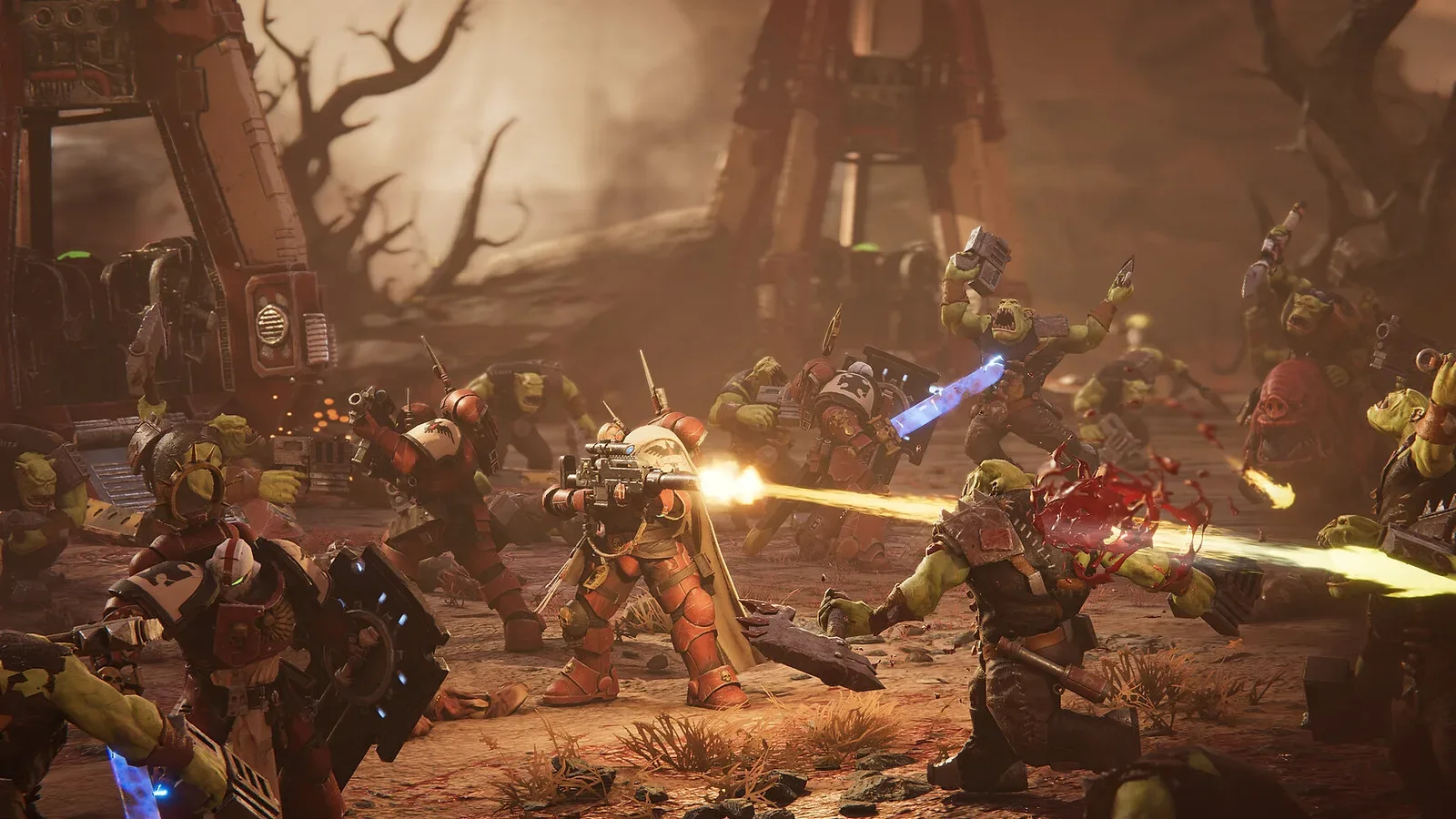
This page compares the two games on the features that matter: scope, factions, campaign, multiplayer and tone. For the full launch roster, see the Dawn of War 4 factions guide→.
Official source: Warhammer 40,000: Dawn of War IV on Steam ↗ — official release date, factions, modes and system requirements.
Dawn of War 4 vs Dawn of War 3 at a glance
| Feature | Dawn of War 3 (2017) | Dawn of War 4 (2026) |
|---|---|---|
| Developer | Relic Entertainment | KING Art |
| Publisher | Sega | Deep Silver |
| Launch factions | 3 (Space Marines, Orks, Eldar) | 4 (Space Marines, Orks, Necrons, Adeptus Mechanicus) |
| Campaign missions | 17 | 70+ |
| Campaign structure | One campaign, rotating factions | Four interwoven campaigns, branching choices |
| Co-op campaign | No | Yes |
| Last Stand | Not at launch | Yes, 3 players and 20 waves |
| Multiplayer maps | Fewer at launch | 30 |
| Base building | Streamlined | Full base building with faction-specific systems |
| Cover and retreat | Simplified | Directional cover, garrisonable buildings, retreat |
| Post-launch mode | Steadily expanded | Crusade Mode, maps, modes, Mission Editor in Year One |
Some of these comparisons are about scale, not quality. Dawn of War 3's 17 missions were cinematic and tightly scripted; Dawn of War 4's 70+ missions are spread across four campaigns and include cooperative play. The trade-off is breadth versus polish per mission.
Factions: three versus four
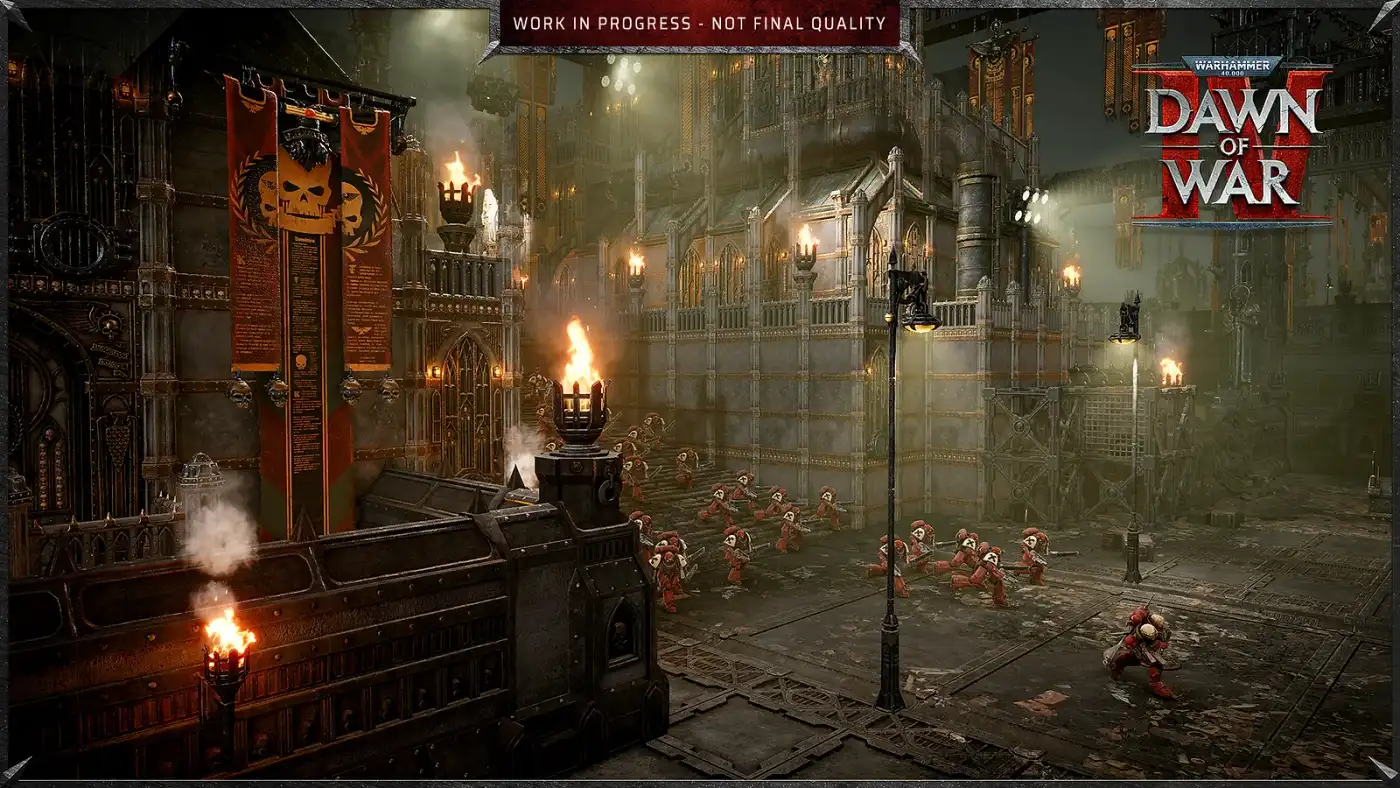
Dawn of War 3 launched with Space Marines, Orks and Eldar. The Eldar were the third faction and a series staple. Dawn of War 4 replaces them with Necrons and Adeptus Mechanicus, and splits the Space Marines into Blood Ravens and Dark Angels sub-factions.
That gives Dawn of War 4 four playable armies at launch:
- Space Marines: elite, expensive, deep upgrade tree, four commanders.
- Orks: cheap, aggressive, Waaagh!-driven, two commanders.
- Necrons: slow, resilient, Power Matrix-based, two commanders.
- Adeptus Mechanicus: ranged, technical, Noosphere Network-based, one commander.
The Eldar absence is the biggest roster change. If Eldar are your favorite faction, Dawn of War 3 still has them, and Dawn of War 4's Aftermath expansion may add a new faction, but it has not been confirmed as Eldar.
Campaign: 17 missions versus 70+
Dawn of War 3 told one campaign with rotating perspectives across the three factions. It was a focused, cinematic story with 17 missions.
Dawn of War 4 tells four separate campaigns that interweave into one narrative. You get 70+ missions, branching choices and co-op support. The story is set roughly 200 years after Dark Crusade, with the Great Rift isolating Kronus and the Blood Ravens rebuilding.
The scale difference is the headline. A 70+ mission campaign is several times longer than Dawn of War 3, and the co-op support changes how you play it. The risk is repetition: more missions can mean more filler. The branching structure and four faction perspectives are the mitigation.
For the campaign structure, see the Dawn of War 4 campaign guide→.
Multiplayer: MOBA influence versus classic RTS
Dawn of War 3's multiplayer was the most divisive part of the game. It emphasized hero units, abilities and a lane-based, MOBA-inspired flow. Some players loved the faster, hero-driven action; others wanted the cover-and-retreat gameplay of the earlier games.
Dawn of War 4 returns to the classic formula:
- Cover: directional cover and garrisonable buildings.
- Retreat: reduced damage while retreating, cancelable during the yellow window.
- On-field reinforcement: powerful but expensive, with a unique Necron variant.
- Base building: faction-specific systems, from Space Marine orbital drops to Ork base crawling and Necron Power Matrix expansion.
- Modes: Annihilation, Domination and Maelstrom, with 1v1 and 2v2 across 30 maps.
That is a deliberate pivot back to Dawn of War 1 and 2. It does not mean the game is slow; Orks and Adeptus Mechanicus are aggressive factions. It means the win condition is army management and map control, not just hero play.
For the multiplayer systems, see the Dawn of War 4 multiplayer guide→.
Last Stand and co-op
Dawn of War 3 did not launch with Last Stand, the three-player survival mode from Dawn of War 2. Dawn of War 4 brings it back: three players, 20 waves, one commander each and up to four companion units.
The mode is a fan favorite because it turns the RTS into a cooperative survival game. It also gives the nine commanders a different use than the campaign or multiplayer.
Dawn of War 4 also supports campaign co-op, which Dawn of War 3 did not. That is a significant addition for players who want to experience the story with a friend.
Tone and presentation
Dawn of War 3 was colorful and heroic, with a bright palette and large, exaggerated units. Dawn of War 4 is darker and more grounded: the Kronus setting is scarred by the Great Rift, and the factions are presented as worn and desperate rather than shiny.
That is a matter of taste. If you liked Dawn of War 3's visual style, Dawn of War 4 may look muted. If you thought Dawn of War 3 strayed too far from the series' grimdark tone, Dawn of War 4 is closer to the source material.
Which should you play?
- Play Dawn of War 3 if: you want a short, cinematic campaign, you love Eldar, or you prefer hero-driven multiplayer.
- Play Dawn of War 4 if: you want a large campaign, co-op, classic cover and retreat mechanics, four factions and Last Stand.
- Play both if: you are a Dawn of War fan and want to see how the series evolved. Dawn of War 3 is often cheap on sale, and it is a useful comparison point.
Dawn of War 4 is not a remake of Dawn of War 3. It is a different studio's take on the series, with a different scope and a different set of priorities. The comparison is useful for setting expectations, not for declaring a winner before release.
Dawn of War 3 was made by Relic, the studio behind the original games. Dawn of War 4 is made by KING Art, with Deep Silver publishing. The change in developer is part of why the design pivots back to the classic formula.
FAQ
Is Dawn of War 4 a sequel to Dawn of War 3?
It is the next mainline game, but it is set roughly 200 years after Dark Crusade and focuses on a new story on Kronus. It is not a direct continuation of Dawn of War 3's campaign.
Does Dawn of War 4 have more factions than Dawn of War 3?
Yes. Dawn of War 4 launches with four factions; Dawn of War 3 launched with three.
Does Dawn of War 4 have Last Stand?
Yes. Last Stand returns with three players and 20 waves. Dawn of War 3 did not have it at launch.
Is Dawn of War 4 more like Dawn of War 1 or 2?
It is closer to the classic formula: base building, cover, retreat and large armies. It also adds modern systems such as on-field reinforcement and faction-specific economies.
Sources
- Warhammer 40,000: Dawn of War IV on Steam ↗ — official feature list.
- Dawn of War III on Steam ↗ — 2017 release details.
- Dawn of War IV Steam news hub ↗ — campaign and mode announcements.