
Dawn of War 4 Counters: Unit and Faction Answer Table
Dawn of War 4 counters for every faction: how to answer Marine armor, Ork swarms, Necron attrition and AdMech firing lines, with the units that work.
Quick answer: Dawn of War 4 counters are about roles, not a rock-paper-scissors table. Melee beats unscreened ranged units, ranged anti-armor beats vehicles, area damage beats clumps and mobility beats slow artillery. Every faction has a gap, and the counter is usually the unit that exploits that gap rather than the unit with the biggest damage number.
Dawn of War 4 has four asymmetrical factions, so a single counter table would be misleading. The same unit can be the correct answer in one matchup and a waste of resources in another. What transfers across every matchup is the logic: identify the enemy's damage source, deny it the position it needs and force it to fight where its support cannot reach.
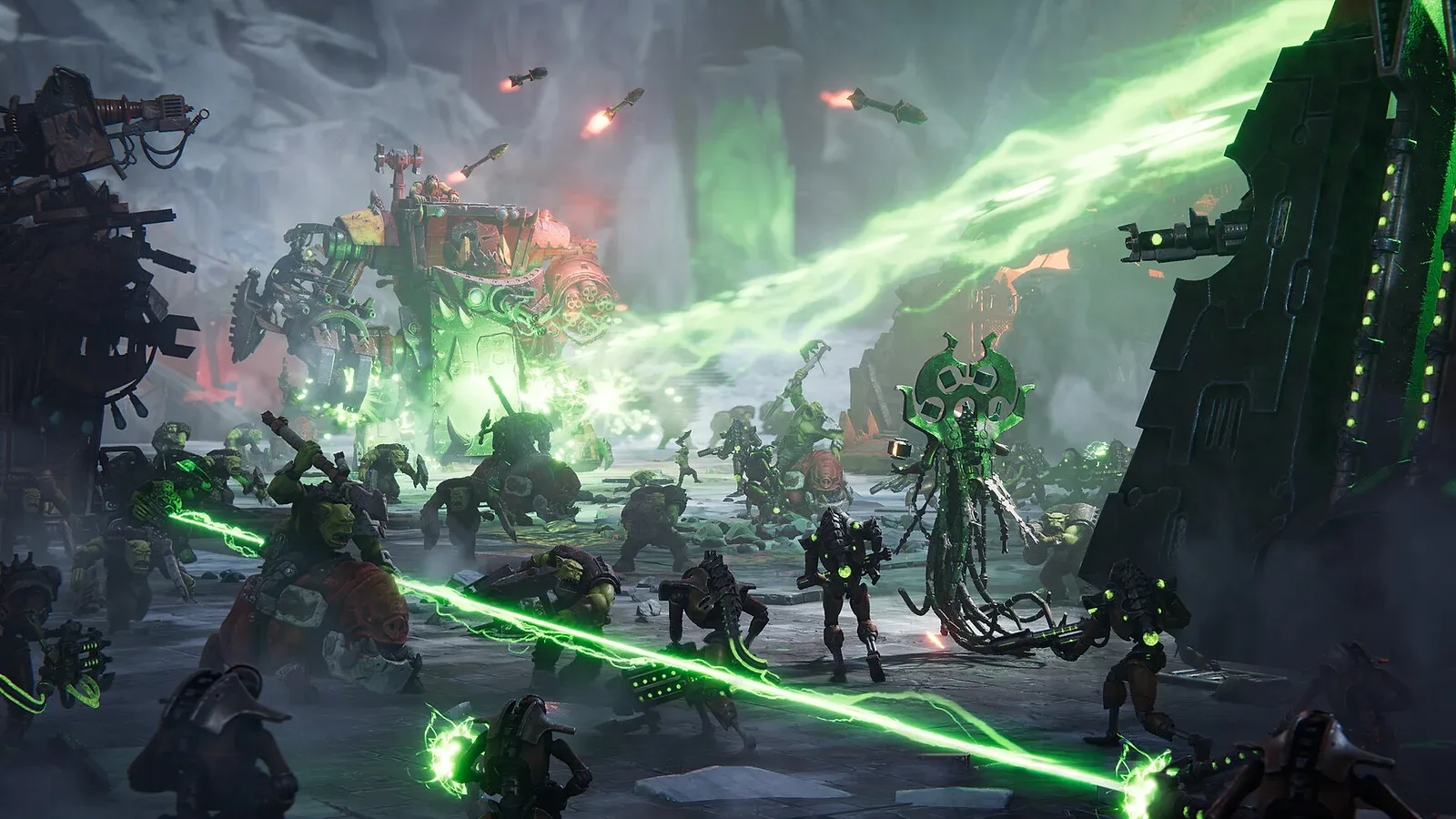
This guide covers the universal counter logic, the faction-by-faction answers and the specific units that solve each problem. For the full roster, see the Dawn of War 4 units list→. For the ranking context, see the tier list→.
Official source: Warhammer 40,000: Dawn of War IV on Steam ↗ — official release date, factions, modes and system requirements.
You cannot counter what you have not seen. The Dawn of War 4 units list→ gives you the silhouettes and roles to identify first.
The four counter rules
Most Dawn of War 4 fights are decided by four rules.
- Melee beats unscreened ranged. A Ranger or Eliminator squad without a screen is free kills for a melee unit. The counter to ranged is not more ranged; it is a unit that closes the distance.
- Anti-armor beats vehicles. Vehicles are expensive and slow. A dedicated anti-armor unit pays for itself by removing one. The counter to a vehicle push is not infantry spam; it is the unit designed to kill armor.
- Area damage beats clumps. A player who stacks units in one spot is asking for a flamer, a grenade or an artillery shot. Spread your units and punish the enemy's clumps.
- Mobility beats static defense. A fortified position is strong in one direction and weak everywhere else. The counter to a turtle is to attack a different point, not to break the wall head-on.
The fifth rule is economic: deny the resource that pays for the army. Marine upgrades, AdMech research and Necron expansion all depend on power or territory. Raiding those is often better than fighting the army.
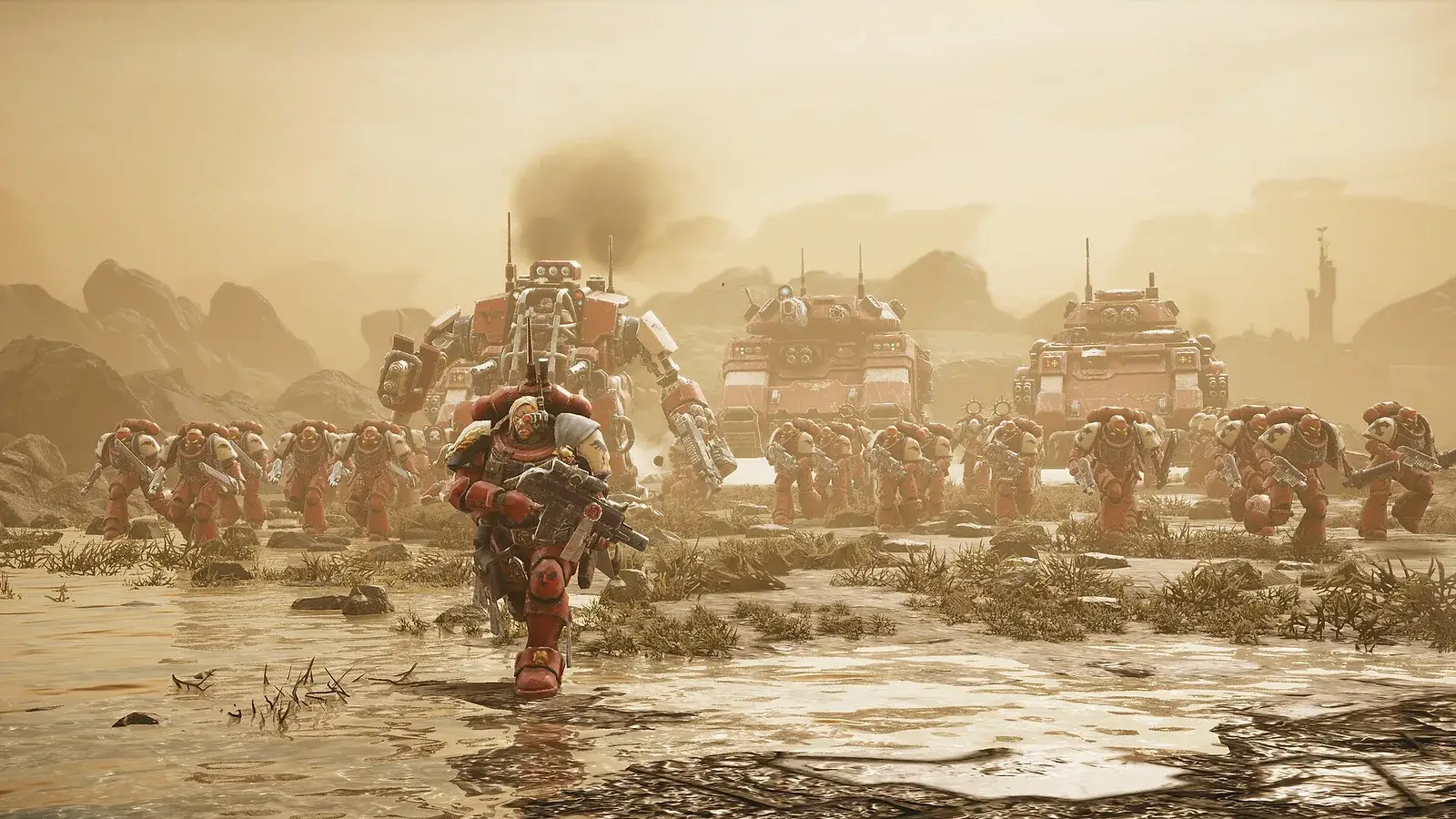
Space Marine counters
Space Marines are elite and expensive. The counter is to make their army split and then punish the smaller piece.
| Threat | Answer | Why it works |
|---|---|---|
| Eliminators / Infiltrators | Melee pressure and area damage | Stealth units are fragile when forced to move |
| Tactical infantry line | Melee tie-up and flanking | Marines have fewer squads; tying one down leaves a gap |
| Redemptor Dreadnought | Anti-armor focus fire | A Dreadnought without infantry support can be surrounded |
| Orbital reserves / Drop Pod | Disengage and reset | The drop is strongest in the first seconds |
| Thunderhawk Relay | Attack the relay or the other lane | The relay is the Marine mobility; kill it or bypass it |
The most important Marine counter is tempo. Marines want a clean fight at full strength. If you force them to fight while their reinforcement is still coming down, you are fighting a smaller army than the one on their roster.
Orks are the natural counter to Marines because cheap units can surround expensive ones. Necrons can out-attrition them if the fight happens on the matrix. AdMech can out-range them if the Marines are forced to walk into the firing line. The Marine answer to all three is the same: retreat, rebuild and hit the weak lane.
Ork counters
Orks are cheap and aggressive. The counter is to survive the first wave without feeding kills, then punish the fact that their units do not scale.
| Threat | Answer | Why it works |
|---|---|---|
| Slugga Boyz wave | Chokepoints and area damage | Ork strength is numbers; narrow ground reduces it |
| Flash Gitz | Melee or artillery | Heavy ranged units are fragile when engaged |
| Squighog Riders | Anti-raider units and vision | Fast units punish isolation but die to prepared defenses |
| Meganobz | Anti-armor and focus fire | Meganobz are expensive; killing one is a big trade |
| Forward buildings | Raider units | Ork buildings are cheap and fragile |
The most common mistake against Orks is chasing. A retreating Ork unit is bait for the next wave. Hold the point, repair, and let the wave come to you. The second mistake is building a single deathball; Orks can split and hit three points at once. Spread your army enough to cover the map, but not so thin that each piece dies alone.
Necrons are the best anti-Ork faction because their units are durable and their matrix heals through the chip damage. Space Marines can win by trading efficiently and retreating. AdMech struggles if the Orks reach the Rangers, but a screened firing line can shred a wave.
Necron counters
Necrons are durable and slow. The counter is to force fights outside the matrix, focus fire until units are dead and attack where the army is not.
| Threat | Answer | Why it works |
|---|---|---|
| Power Matrix | Attack outside it | Necron units lose much of their staying power off the matrix |
| Resurrection Galleries | Raid the gallery | Free replacements are the faction's sustain |
| Necron Warriors | Focus fire and area damage | Spreading damage lets them heal back |
| Doomstalkers | Fast melee or flanking | Anti-armor units are vulnerable when engaged |
| Monolith | Anti-armor and isolation | The Monolith is slow; punish it away from support |
The key to beating Necrons is patience. They want you to attack into the matrix, lose units and feed the Resurrection Galleries. Do not take that fight. Take the undefended point, force the army to move, and hit it while it is out of position.
Orks are the best anti-Necron faction because they can attack multiple points and overwhelm the slow response. AdMech can out-range Necrons if it keeps the fight outside the matrix. Space Marines can win with mobility and focused pushes, but they cannot out-attrition the matrix.
AdMech counters
AdMech is fragile and network-dependent. The counter is to close the distance, kill the relays and force fights outside the network.
| Threat | Answer | Why it works |
|---|---|---|
| Skitarii Rangers | Melee | Rangers collapse when engaged |
| Ruststalker screen | Ranged focus fire | The screen is melee; kill it before it reaches your line |
| Cogitator Relays | Raiders and artillery | The network is the army's power source |
| Knight Castellan | Isolation and anti-armor | The knight is slow and expensive without support |
| Void Shield | Bypass and attack elsewhere | A shield protects one position, not the map |
The most important AdMech counter is target priority. Do not fight the Rangers while the relays are alive and the screen is intact. Kill the relays first, force the army to fight outside the network, or close the distance with melee and stay there. AdMech has no cheap answer to a melee surround.
Orks are the best anti-AdMech faction because they can close the distance and overwhelm the screen. Space Marines can win with a fast drop on the relays. Necrons can outlast the ranged damage if they fight on the matrix. AdMech's own mirror match is decided by network placement and screen discipline.
Counters by unit role
If you do not know the specific matchup, use the role table.
- Enemy has a deathball: area damage, artillery, flamers.
- Enemy has stealth: vision, detection, spread formation.
- Enemy has vehicles: anti-armor, focus fire, chokepoints.
- Enemy has artillery: mobility, flanking, attack the spotter.
- Enemy has a turtle: take the map, deny expansion, attack the weakest point.
- Enemy has a fast raider: vision, prepared defenses, do not chase.
- Enemy has a commander-centric army: snipers, focus fire, force the commander to retreat.
How to build a counter army
The mistake new players make is building a little of everything. A counter army is focused: identify the enemy's main damage source, build two answers to it and enough line units to protect them.
- Scout the enemy's first tech choice. You cannot counter what you cannot see.
- Identify the damage source. Is the army winning because of ranged fire, melee pressure, armor or artillery?
- Build the answer, not the mirror. If the enemy is winning with ranged fire, build melee or artillery, not more ranged.
- Protect the answer. A counter unit without a screen dies before it does its job.
- Adapt when the enemy adapts. A counter that worked in the first fight may be obsolete by the third.
The best counter army is not the one with the most units. It is the one with the fewest wasted units. Every unit should either hold space, kill the thing that is winning the fight or protect the unit that kills it.
FAQ
What counters Space Marines in Dawn of War 4?
Melee pressure, multi-lane attacks and anti-armor focus fire. Marines are expensive and few, so forcing them to split and killing the smaller piece is the most reliable counter.
What counters Orks?
Chokepoints, area damage and attacks on forward buildings. Orks rely on numbers and pressure, so denying them space and killing their reinforcement structures blunts the wave.
What counters Necrons?
Fights outside the Power Matrix, focus fire until units are dead, raids on Resurrection Galleries and attacks on a different lane. Necrons are slow and lose much of their power off the matrix.
What counters Adeptus Mechanicus?
Melee, relay destruction and fights outside the Noosphere Network. AdMech's ranged power depends on the network and the screen; remove either and the army collapses.
Sources
- Warhammer 40,000: Dawn of War IV on Steam ↗ — official faction list.
- Dawn of War IV official site ↗ — faction counterplay notes.
- Dawn of War IV Steam news hub ↗ — developer combat deep dives.